
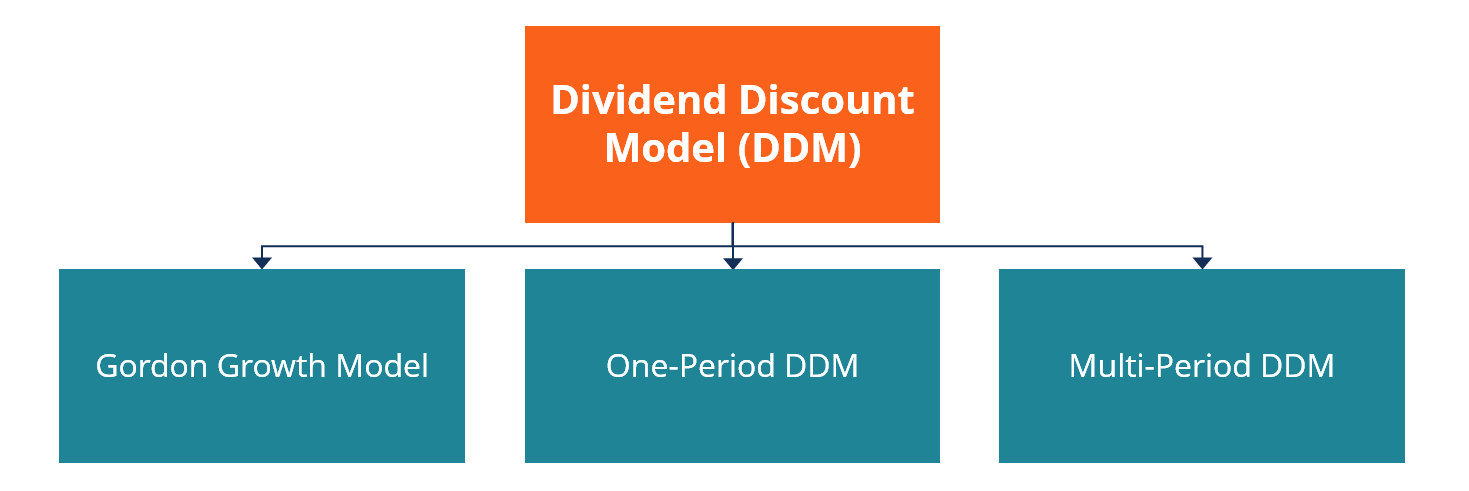
When investors talk about valuing a stock, they often focus on earnings, growth stories, or market sentiment. Dividend Discount Models (DDMs) take a more direct approach: they estimate a stock’s intrinsic value based on the cash the shareholder expects to receive in the future, dividends discounted back to today. This method is especially useful for dividend-paying companies with relatively stable payout patterns, such as mature firms in banking, utilities, consumer staples, or certain industrial sectors. For learners in a business analytics course, DDMs are a practical way to combine finance concepts with structured modelling and scenario analysis.
What a Dividend Discount Model Does
A DDM is built on one simple idea: the value of a stock equals the present value of all expected future dividends. Because money received in the future is worth less than money received today, future dividends must be discounted using a required rate of return (also called the discount rate).
In its most basic form, the logic is:
- Forecast dividends into the future
- Choose an appropriate discount rate
- Calculate the present value of those dividends
- Sum the present values to estimate the intrinsic stock value
If the intrinsic value is higher than the current market price, the stock may be undervalued (subject to model assumptions). If it is lower, the stock may be overvalued.
Key Inputs: Dividends, Growth, and Discount Rate
The quality of a DDM depends on three inputs. Small changes in any of them can change the valuation meaningfully, so it is important to be disciplined and transparent.
Dividend Forecasts
Dividends can be projected using:
- Historical dividend growth trends
- Payout ratios and earnings forecasts
- Management guidance and dividend policy
For companies with irregular dividends, DDM becomes less reliable because the “cash return” signal is weak or unpredictable.
Dividend Growth Rate
Many DDM versions assume dividends grow at a consistent rate, at least over the long term. Growth assumptions should be realistic and linked to fundamentals such as earnings growth, return on equity, and reinvestment capacity. A common modelling mistake is to assume a high dividend growth rate forever, which usually inflates valuation.
Discount Rate (Required Return)
The discount rate represents the return an investor demands for holding the stock, considering risk. In practice, analysts often estimate it using a cost of equity approach, where riskier stocks have higher required returns. The discount rate is one of the most sensitive inputs in the model, so it is good practice to run scenarios instead of relying on a single number.
Common Types of Dividend Discount Models
DDMs come in several variations depending on how dividend growth is expected to behave over time.
Gordon Growth Model (Single-Stage DDM)
This is the simplest version, assuming dividends grow at a constant rate indefinitely. It is most suitable for mature companies with stable dividend policies.
The idea is: value is based on next year’s dividend divided by (discount rate minus growth rate). While simple, it can break down if the growth rate is close to the discount rate or if growth is not stable.
Two-Stage DDM
Many companies grow dividends at a higher rate for a few years and then settle into a stable long-term growth rate. The two-stage model reflects that reality:
- Stage 1: higher growth for a finite period
- Stage 2: stable growth forever after
You discount the first stage dividends individually, then calculate a “terminal value” at the start of stage 2 and discount it back.
Multi-Stage DDM
For businesses with more complex transitions, such as rapid growth, moderate growth, and maturity, a multi-stage model can be used. The benefit is realism, but the model becomes more assumption-heavy, so documentation and sensitivity analysis become even more important.
Where DDM Works Well and Where It Fails
DDM is powerful when used in the right context, but it is not universal.
Best Use Cases
- Companies with consistent dividend payments
- Predictable dividend growth patterns
- Mature industries with stable cash flows
- Situations where dividends are a meaningful part of total shareholder return
Limitations
- Not suitable for non-dividend-paying firms (many tech and high-growth firms)
- Difficult for firms with volatile payouts or frequent policy changes
- Can understate value if a company reinvests heavily instead of paying dividends
- Highly sensitive to discount rate and long-term growth assumptions
This is why analysts often use DDM alongside other valuation methods rather than relying on it alone.
A Practical Modelling Workflow for Analysts
If you are building a DDM in a spreadsheet, follow a structured approach:
Step 1: Gather Historical Dividend Data
Review dividend history, payout ratio trends, and earnings stability to judge predictability.
Step 2: Choose the Model Type
Use single-stage only if dividend growth is stable. Otherwise, use two-stage or multi-stage.
Step 3: Forecast Dividends
Estimate future dividends based on growth assumptions and business fundamentals.
Step 4: Select a Discount Rate
Use a defensible required return and document why it fits the stock’s risk profile.
Step 5: Run Sensitivity Checks
Test how value changes under different growth and discount rate scenarios. This step is often the most valuable because it shows decision-makers the risk range rather than a single “precise” number.
Conclusion
Dividend Discount Models estimate stock value by discounting expected future dividends back to today, making them especially useful for stable, dividend-paying companies. The model’s strength is its clarity: it ties valuation directly to shareholder cash returns. Its weakness is sensitivity: small changes in growth or discount rate can significantly shift the outcome. Used thoughtfully, with realistic assumptions and sensitivity analysis, DDM can be a strong addition to an investor’s toolkit and a practical modelling exercise for anyone building analytical finance skills through a business analytics course.